Introduction
In an increasingly interconnected world, safety is paramount. Fire remains one of the most destructive and potentially lethal disasters, which is why reliable fire alarm control panels and systems are crucial for safeguarding lives and property. In this article, we will explore the significance of fire alarm control panels and systems, their components, and their role in fire prevention and response.
The Basics: Fire Alarm Control Panels
Fire alarm control panels serve as the central nervous system of any fire protection system. These panels are designed to monitor various sensors and detectors spread throughout a building, constantly assessing for signs of fire or smoke. When a potential fire hazard is detected, the control panel initiates a series of actions to alert building occupants, emergency services, and initiate fire suppression measures if necessary.
Key Components of a Fire Alarm Control Panel:
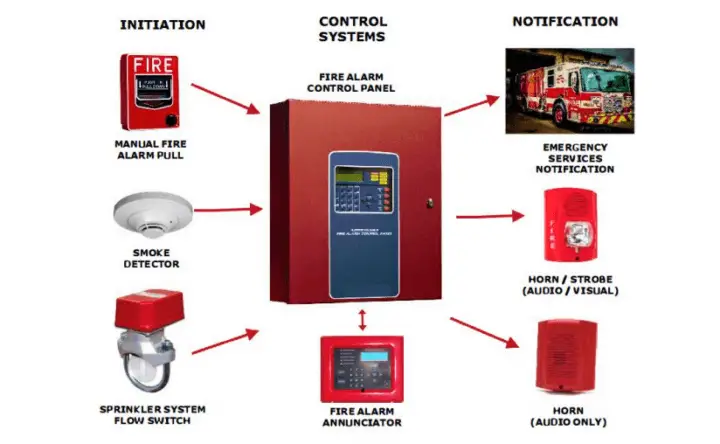
1. **Detectors and Sensors**: Smoke detectors, heat detectors, and flame detectors are the primary sensors used to detect fires. They trigger the alarm panel when they detect abnormal levels of heat, smoke, or flames.
2. **Notification Devices**: These include alarms, strobe lights, sirens, and speakers, which activate to alert occupants of a potential fire emergency.
3. **Manual Pull Stations**: Located throughout a building, manual pull stations allow occupants to manually trigger the alarm system if they spot a fire.
4. **Communication Equipment**: Fire alarm control panels are often connected to monitoring stations or emergency services via telephone lines or cellular networks, ensuring swift response in the event of an emergency.
5. **Control and Display Panel**: The user interface of the control panel provides information about the system's status and allows for manual control and system programming.
6. **Backup Power Supply**: To ensure functionality during power outages, control panels are equipped with backup batteries.
The Functionality
Fire alarm control panels are designed to perform several critical functions:
1. **Detection**: Continuously monitor the environment for signs of fire or smoke.
2. **Notification**: When a fire hazard is detected, the system activates alarms and notification devices to alert occupants.
3. **Communication**: Establish a connection with monitoring stations or emergency services to report the incident and request assistance.
4. **Suppression Activation**: In some cases, control panels are integrated with fire suppression systems, such as sprinklers, to initiate fire suppression measures automatically.
5. **Emergency Lighting Control**: Control panels may also manage emergency lighting systems to guide occupants to safety during an evacuation.
Benefits and Importance
Fire alarm control panels and systems play a vital role in safeguarding lives and property. Here are some key benefits and reasons for their importance:
1. **Early Detection**: They provide early detection of potential fire hazards, allowing for timely evacuation and response.
2. **Reduced Property Damage**: Swift response to fires can significantly reduce property damage and limit business interruption.
3. **Life Safety**: Fire alarm systems prioritize the safety of building occupants, helping them evacuate in an orderly manner.
4. **Compliance**: Many local building codes and regulations mandate the installation of fire alarm systems to ensure safety and compliance.
5. **Integration**: These systems can be integrated with other security and safety systems, creating a comprehensive security infrastructure.
Conclusion
Fire alarm control panels and systems are the backbone of fire protection in buildings, both residential and commercial. Their ability to detect fires early, alert occupants, and facilitate swift response from emergency services makes them indispensable in modern construction. Investing in a reliable fire alarm system is not just a legal requirement; it is a moral responsibility to protect lives and property from the destructive force of fire.
The Fire Alarm Control Panel (FACP) monitors and controls all functions of the fire alarm system. It receives input from initiation devices like a manual pull station or smoke detector, and controls output for notification devices like a horn or strobe, which notify facility staff and other people in the building that the fire alarm system has detected a fire, smoky condition or system problem.
FACP also allows staff to reset the fire alarm system and control other functions manually as needed. The FACP displays the status of the fire alarm system using visible and audible indicators.
A visible indicator can be a light, text display or other similar method. An audible indicator can be a bell, horn or other similar method. The sound it makes must be distinctive from any other audible indicators in the area that are not part of the fire alarm system.
FACP: Fire Alarm Control Panel
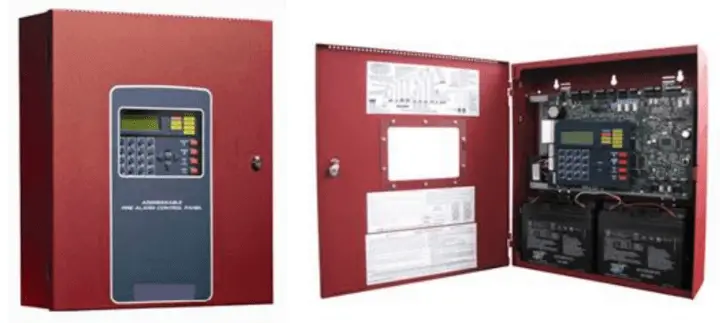
FACP Cabinet
The FACP is commonly called the main fire alarm panel and is contained in a cabinet. The cabinet allows you to see the status of the fire alarm system without having to unlock or open the cabinet door. Depending on the type of cabinet, you might have to unlock or open the cabinet door to access the FACP control functions.
The cabinet is metal or another durable material and is often red in color, although it can be any color. The cabinet often contains the batteries used for emergency back-up in the event of normal power loss.
What is a Fire Alarm Annunciator ?
A fire alarm annunciator is the component of the fire alarm system that displays the status of the fire alarm system using visible and audible indicators. A fire alarm annunciator is commonly called a remote annunciator and is located in an area of the building separate from the FACP.
The remote annunciator notifies the facility staff and other people in the building that the fire alarm has detected a fire, smoky condition or system problem. The remote annunciator might also include controls that allow facility staff to reset the fire alarm system and control other functions manually as needed.
The remote annunciator might indicate the fire alarm system status for the entire building served by the fire alarm system or only for a specific portion of the building (units served).
As an example, the remote annunciator on each floor might only indicate the fire alarm status for that floor and not for the entire building (e.g., smoke detector activation on the second floor would only annunciate on the second floor). The fire alarm system, including the remote annunciator, must meet the annunciation requirements specified by NFPA 72, 1-5.7.3.
Even though the remote annunciator performs some of the same functions as the FACP, it is not considered the FACP. The fire alarm annunciation and FACP functions are distinct functions.


कोई टिप्पणी नहीं:
एक टिप्पणी भेजें